Designed the roads of the future, connected and autonomous.
Autonomy is being built into cars, not into the roads they drive on. We were the sole design partner on the three-person team that answered Michigan's RFP for a different kind of road, and the drawings we made won the contract that created Cavnue.
We built the identity, the diagram system, the investor material and the press launch that followed.
The mark is the roadway itself: two lanes folding into an infinite loop, carrying the same hairline weight as the diagrams.
The proposal that created the company
Fifty-five pages answering MDOT: the vision, the two futures, the four-layer stack, the build-and-deploy sequence, the business case and the team. Nothing in it had been built yet.
Palette & type
We sampled the whole system off the road itself, from asphalt greys to verge green and safety orange. Nothing is invented, and the drawings read as engineering documents. One hue carries one class of road user and holds across the deck, and a reader learns the key once. Green is the fleet the client controls, orange the fleet they can certify, grey the traffic they inherit.
A shared drawing system
The figures walk the corridor from a siloed intersection to a phased laneway, all drawn to the same rules so any plate can sit beside any other.
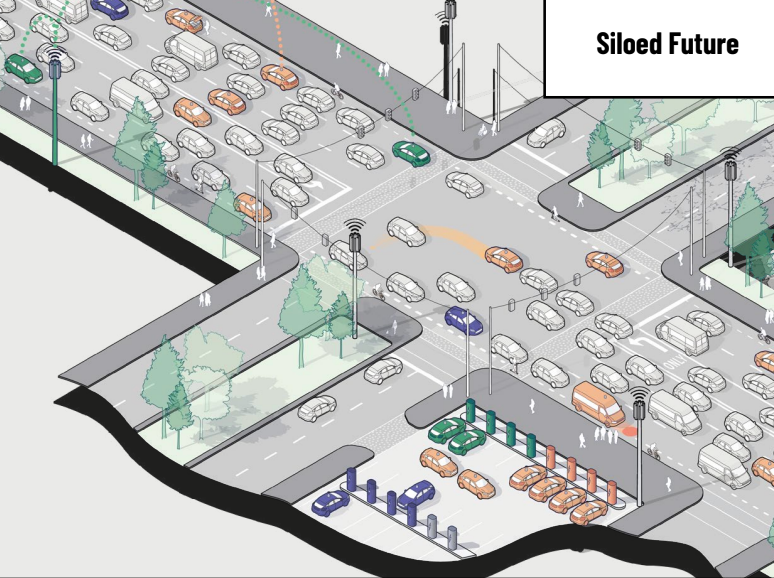
Autonomy arrives vehicle by vehicle. Cars talk to themselves and not to each other or to the road. The intersection fills, the signals stay dumb, and the gain is private. Three fleets are drawn in three greens and blues with no shared network between them.
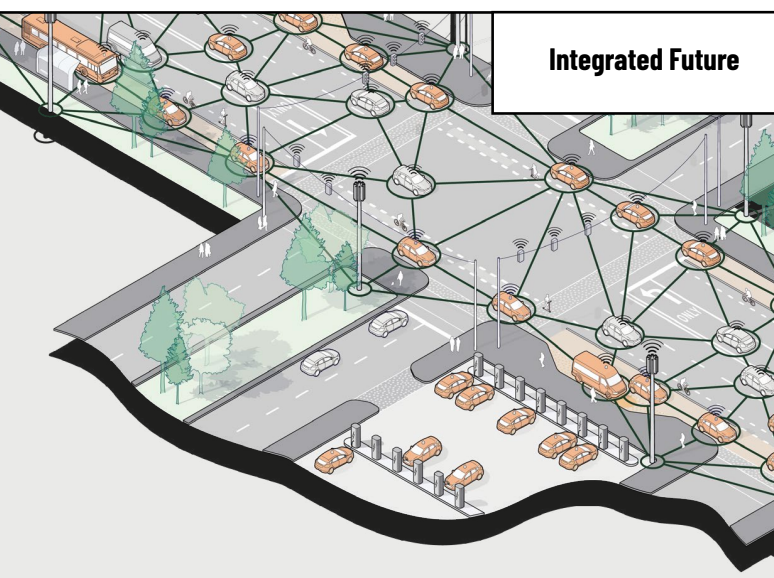
The same intersection with coordination infrastructure in it. One fleet colour, and a mesh drawn between every vehicle, signal and pole. The connection lines are the product, and they are the only linework allowed to break the grey.
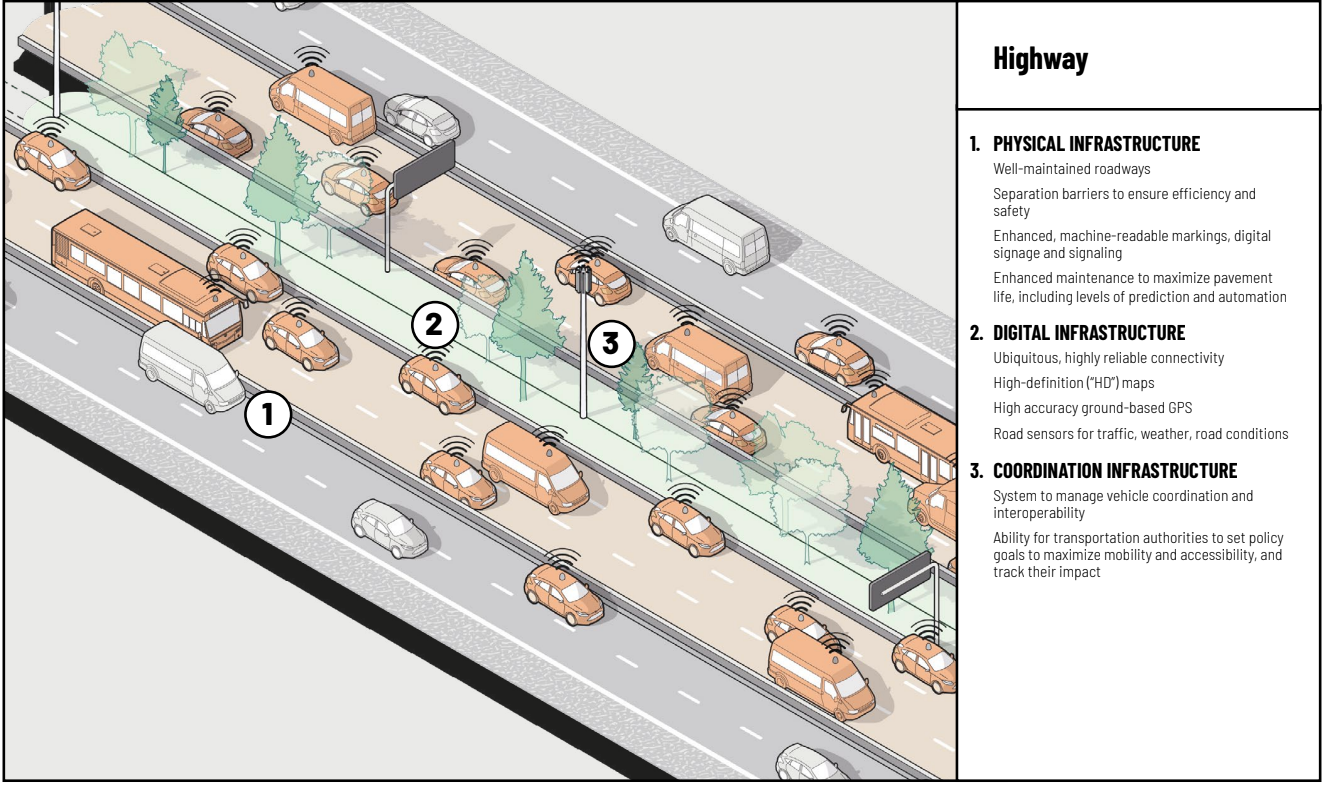
The limited-access case: a separated laneway with machine-readable markings and continuous connectivity. Three tiers only, ordered physical, digital, then coordination, the order a road gets built in.
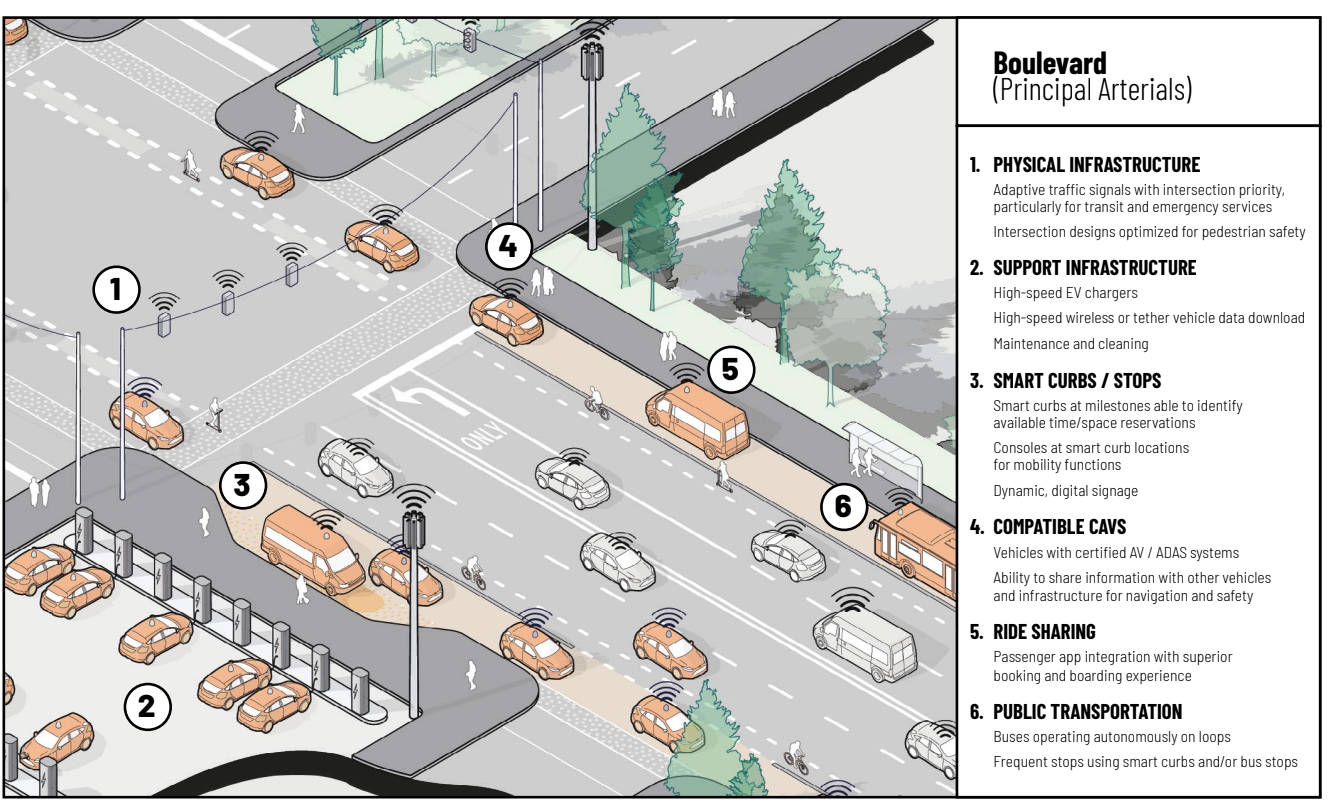
The same axonometric angle, hairline weight and key as the highway, now carrying six tiers instead of three. Rather than adding new symbols, each tier is separated by elevation and a single accent colour, so a denser street still reads at a glance.
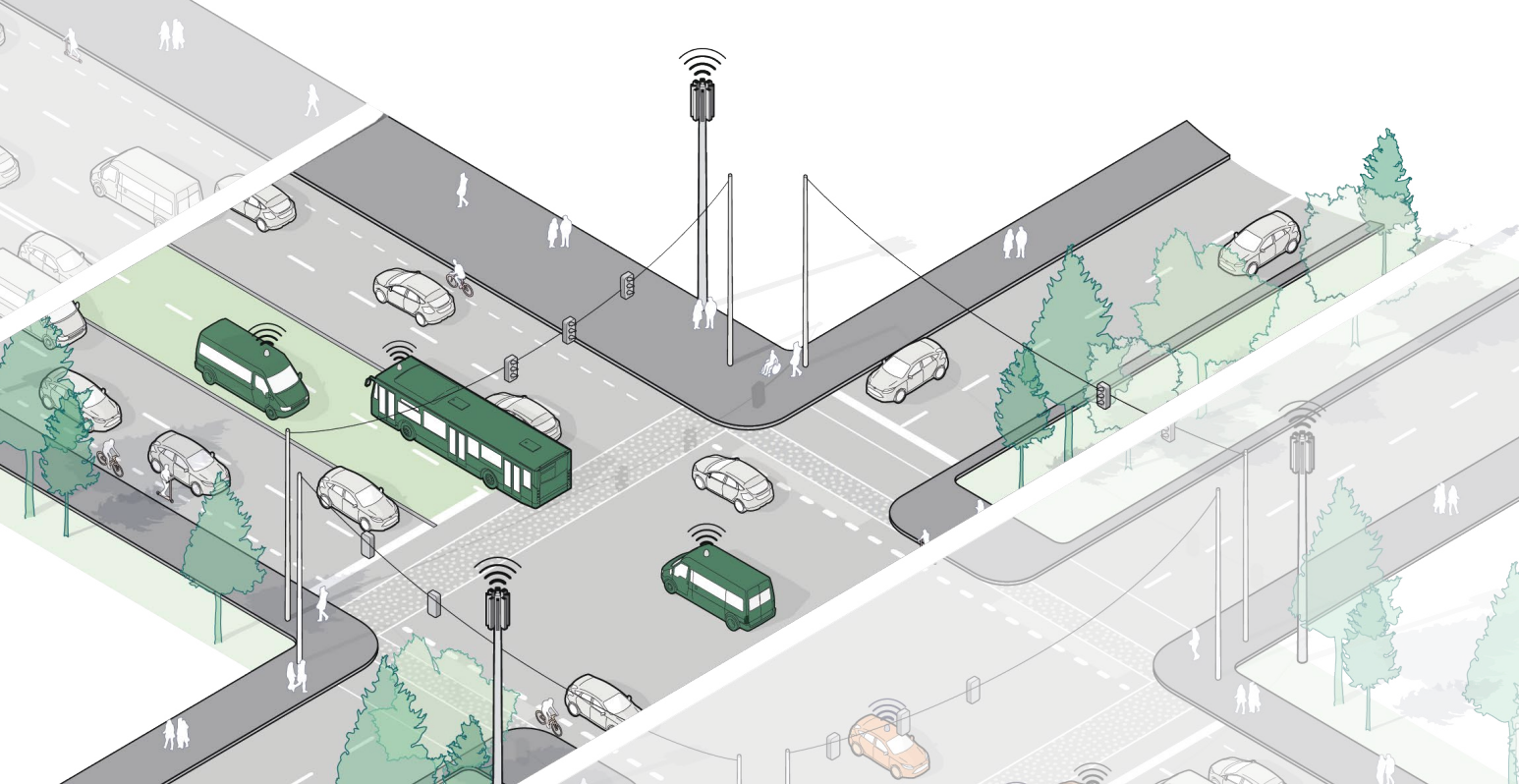
The dedicated lane moves into the median, and transit runs it first, before private CAVs, because transit is the fleet a transportation authority can mandate.
Iterative build and deploy
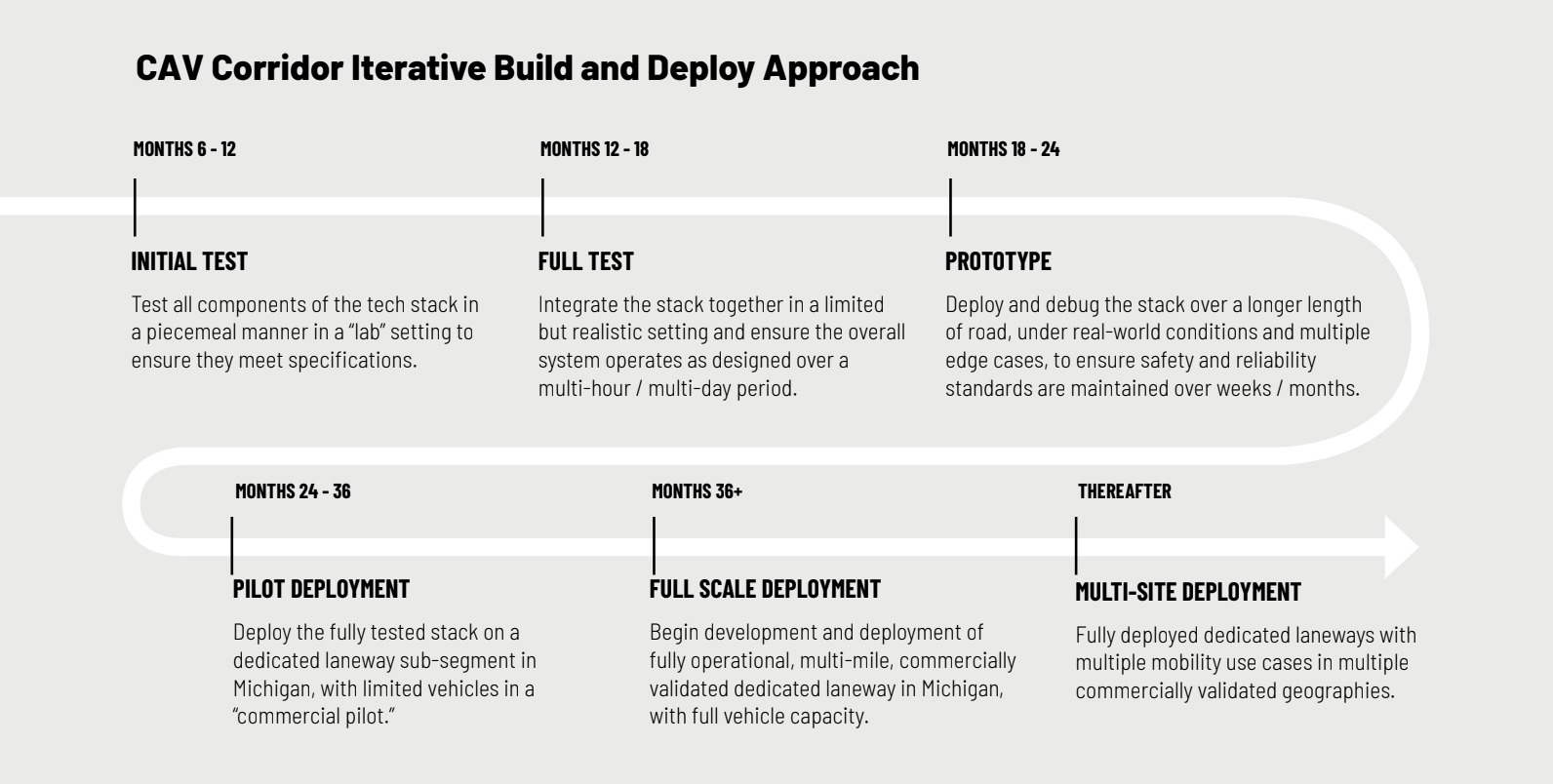
The corridor was pitched as a sequence rather than a switch, and each phase is small enough to fund and audit on its own.
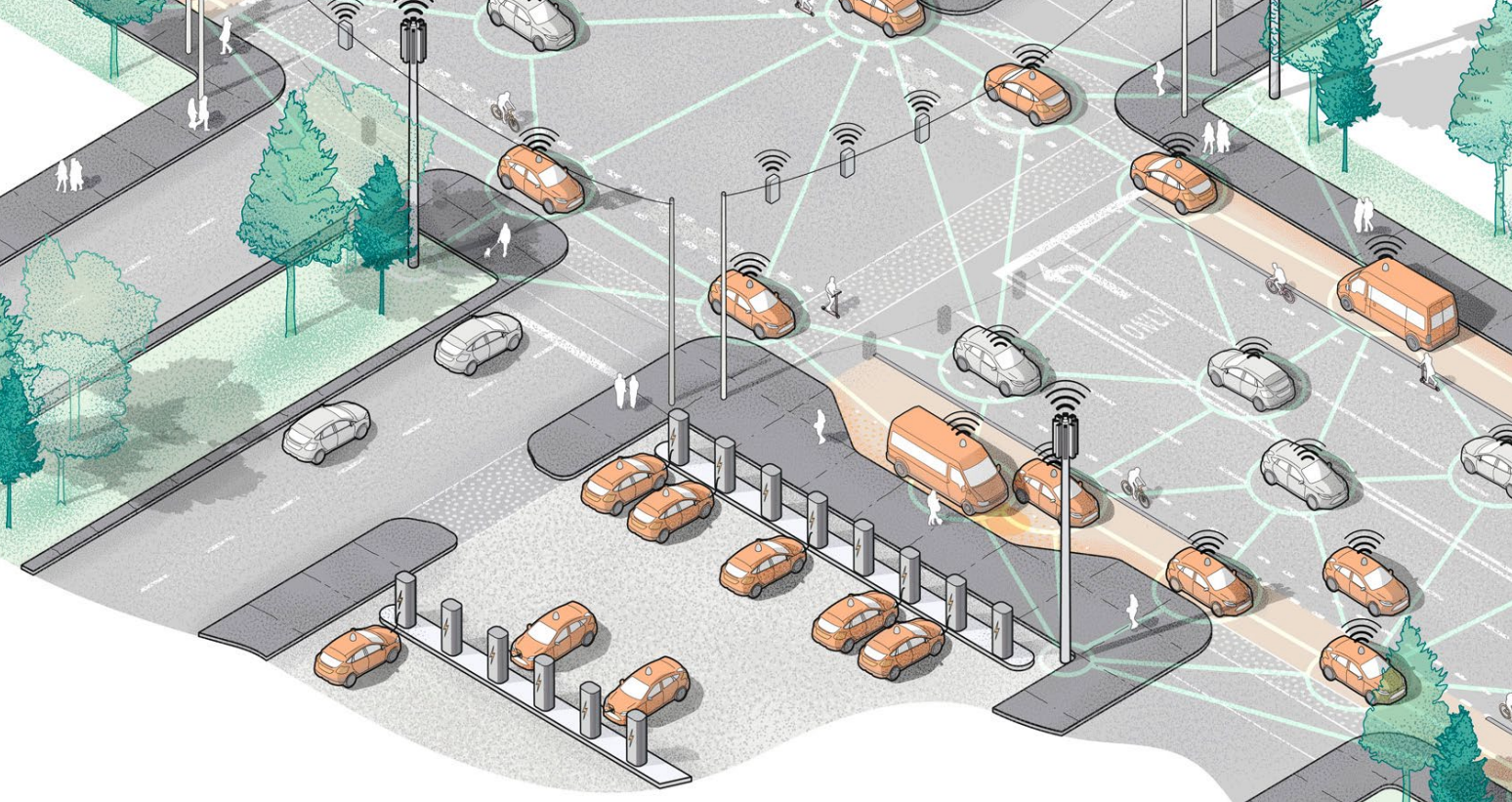
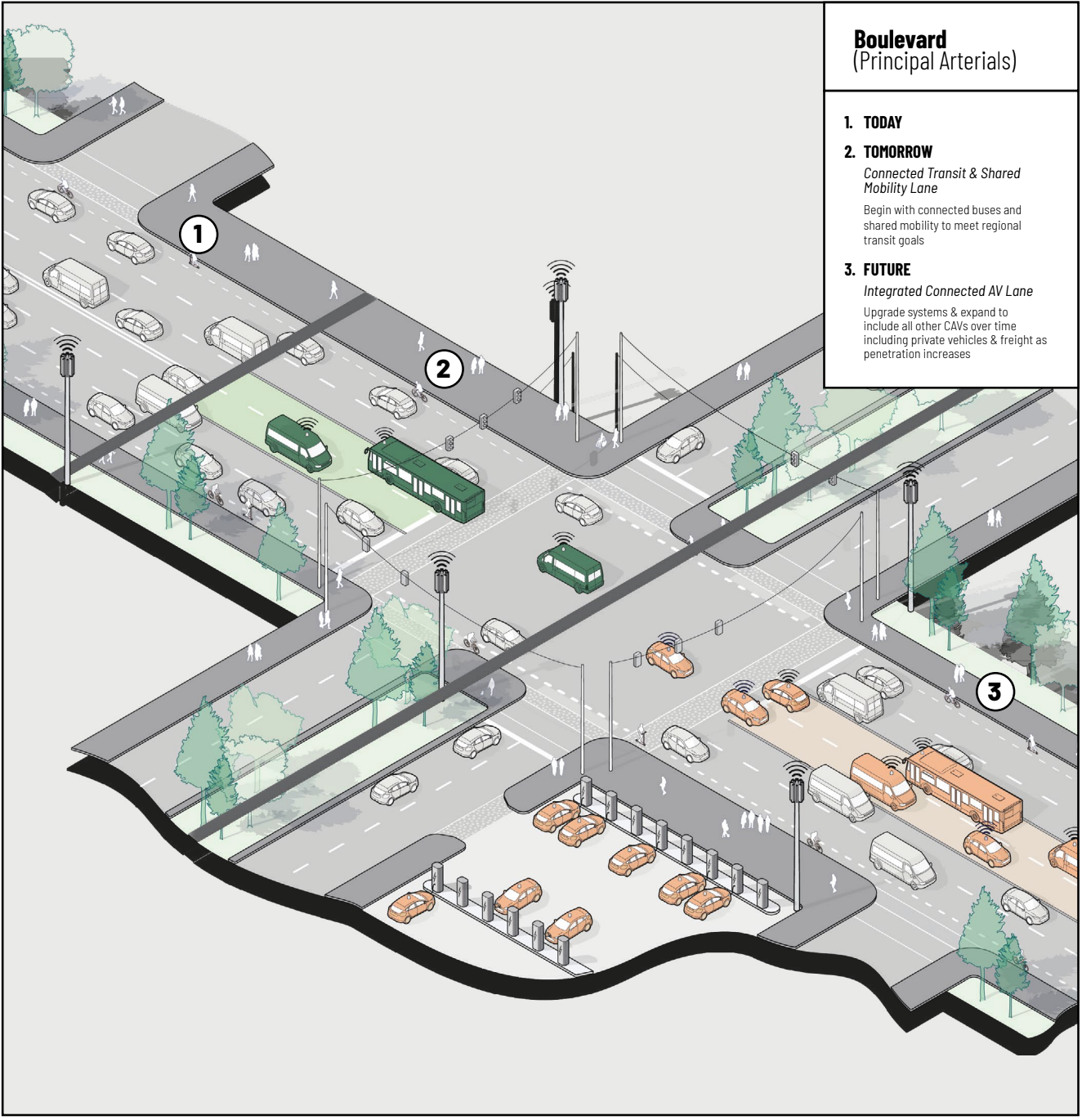
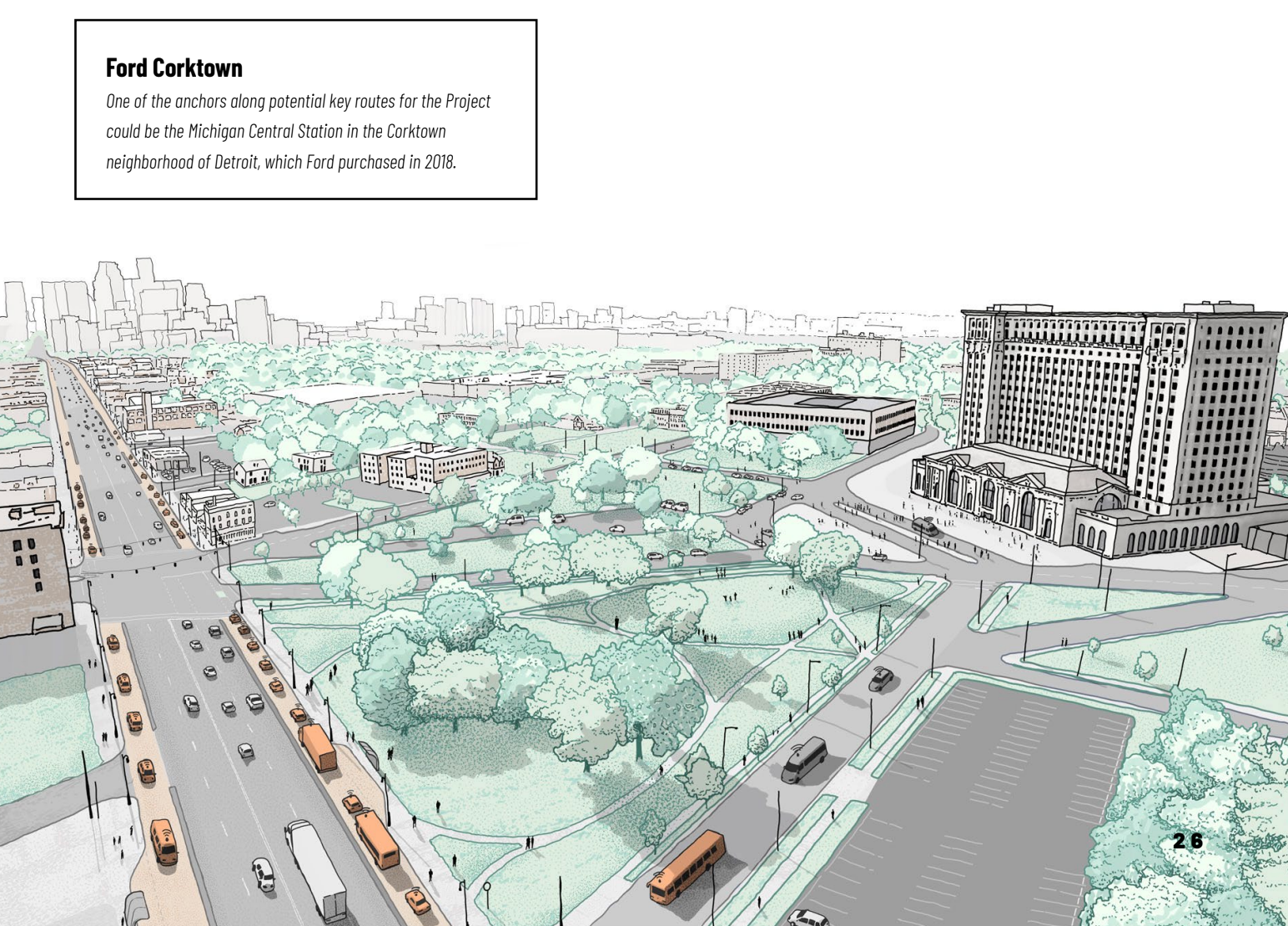
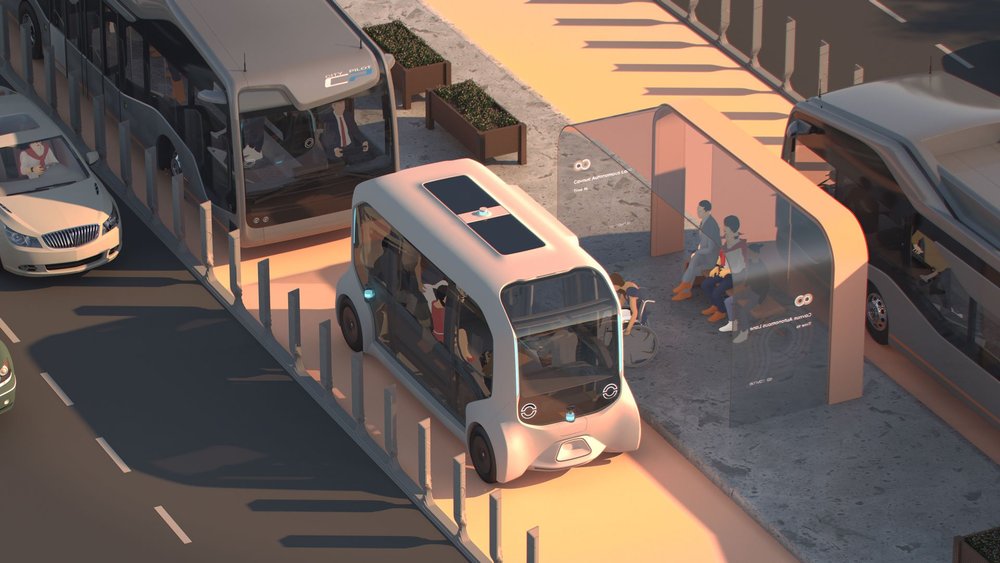
Concept views made alongside the deck.
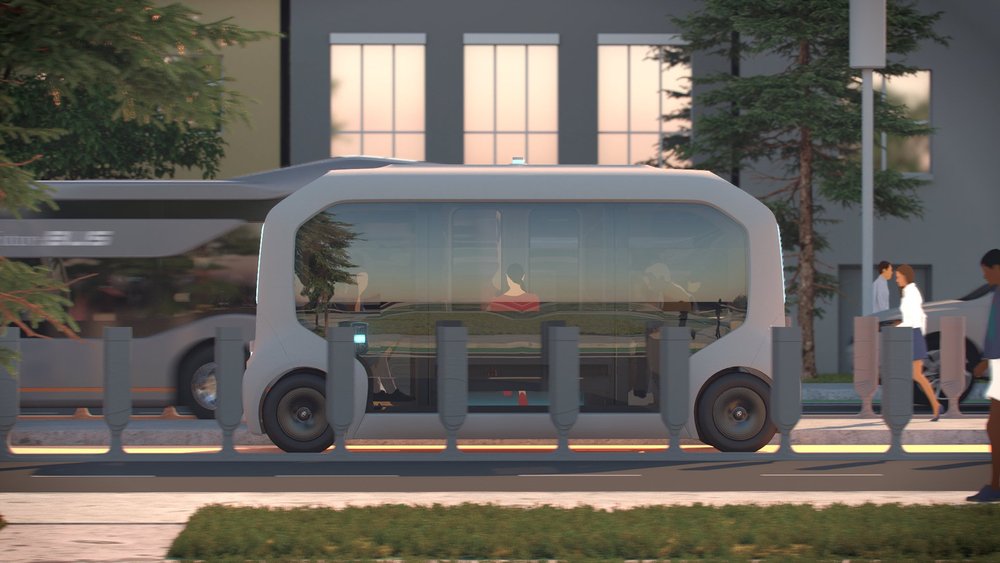
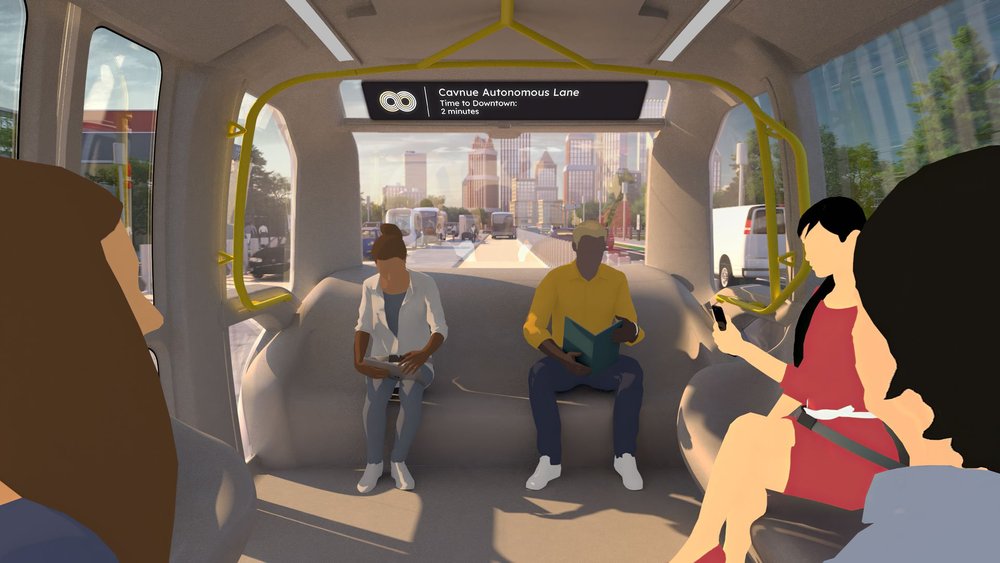
Concept views made alongside the deck, at street level and inside the vehicle. Both were drawn off the same axonometric system as the diagrams.
Michigan Connected Corridor, August 2020
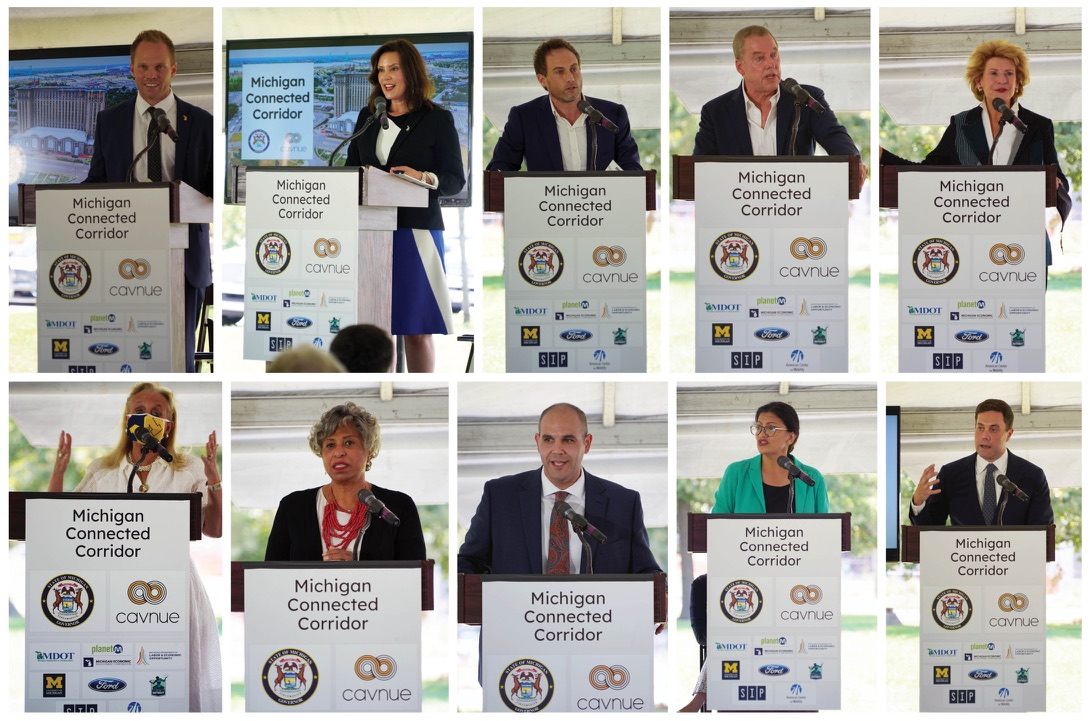
Governor Whitmer, Bill Ford, Senator Stabenow and Representative Tlaib announced the corridor at a podium running on an identity six weeks old.
“The road had to be drawn before it could be funded.”